Yoga is often marketed for its physical benefits — flexibility, strength, better posture. But for
many people, the reason they keep coming back to their mat has little to do with any of that.
It’s the sense of calm that follows a session, the quieting of a racing mind, the feeling of
being fully present in your body instead of stuck in your head. That effect isn’t incidental.
It’s the result of a real, physiological connection between how you move and breathe, and
how your nervous system responds to stress.
Why Yoga Affects the Mind, Not Just the Body
Stress and anxiety live largely in the nervous system — specifically, in an overactive
sympathetic nervous system, the “fight or flight” response that keeps the body on high alert
even when there’s no real danger present.
Yoga works directly on this system through a combination of:
Controlled breathing (pranayama), which signals the parasympathetic nervous system
— the “rest and digest” state — to activate
Slow, deliberate movement, which requires focus and pulls attention away from
anxious thought loops
Physical release of tension, since chronic stress often shows up as tightness in the
shoulders, jaw, hips, and lower back
This is why a yoga session can leave you feeling calmer in a way that’s different from other
forms of exercise — it’s not just physical exertion, it’s a direct intervention on the stress
response itself.
The Role of Breath
Breath is the most immediate link between mind and body in a yoga practice. Anxious states
are almost always accompanied by short, shallow breathing high in the chest. Yoga
deliberately reverses this pattern.
Simple breathing techniques worth learning:
Diaphragmatic breathing — breathing deep into the belly rather than the chest, which
slows the heart rate
Extended exhale breathing — making the exhale longer than the inhale (for example,
inhale for 4 counts, exhale for 6), which actively cues the body to relax
Box breathing — equal counts of inhale, hold, exhale, hold — often used to interrupt a
spiral of anxious thoughts
Even without any poses at all, a few minutes of intentional breathing can measurably lower
stress in the moment.
Poses That Support Stress and Anxiety Relief
While any consistent yoga practice helps, certain poses are particularly effective for calming
the nervous system:
Child’s Pose — a grounding, inward-focused resting pose
Legs-Up-the-Wall — encourages relaxation and is often used specifically for anxiety
and restlessness
Cat-Cow — gentle spinal movement paired with breath, useful for releasing tension
carried in the back
Forward Folds — folding inward often has a naturally calming, introspective effect
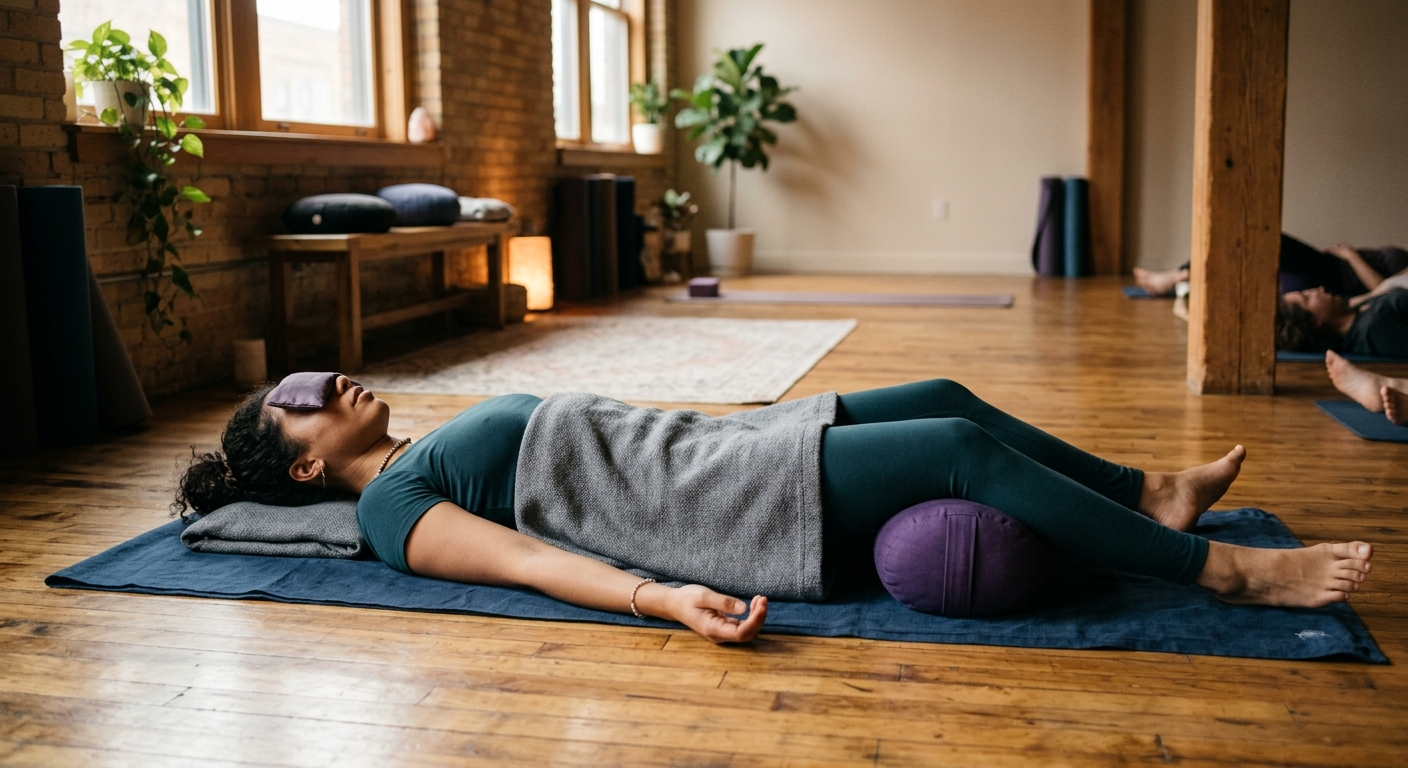
Savasana (final rest) — allows the nervous system to fully downshift after a practice
These poses tend to be slower and less physically demanding, which allows attention to
move from the outer, physical dial and toward the parasympathetic response.
Presence Over Performance
One of the most underrated benefits of yoga for anxiety is the mental practice of returning
to the present moment. Anxiety often lives in the past (rumination) or the future (worry).
Yoga, by requiring focus on breath, alignment, and sensation in the body, pulls attention
back to right now.
This is why the same physical pose can feel entirely different depending on your mental
approach to it. A forward fold rushed through while thinking about your to-do list offers little
of the calming benefit. The same pose, held slowly with attention on breath and sensation,
becomes a genuine mental reset.
Building the Habit for Long-Term Benefit
A single session can ease stress in the moment, but the larger benefit — a nervous system
that’s generally less reactive to daily stressors — comes from consistency over time. Even
10–15 minutes of slow, breath-focused practice a few times a week has a cumulative effect,
training the body to return to a calm baseline more easily.
The physical postures of yoga are often just the entry point. What keeps people practicing
long-term is this deeper effect: a practical, repeatable way to interrupt stress and anxiety
before they take over, using nothing more than breath, movement, and a few minutes of
undivided attention.
If you’re dealing with ongoing stress or anxiety, yoga can be a valuable tool alongside — not
a replacement for — professional support. If this is something you’re navigating personally,
consider talking with a doctor or therapist as well.
What poses or breathing techniques help you the most when you’re feeling anxious? Share
in the comments below.

