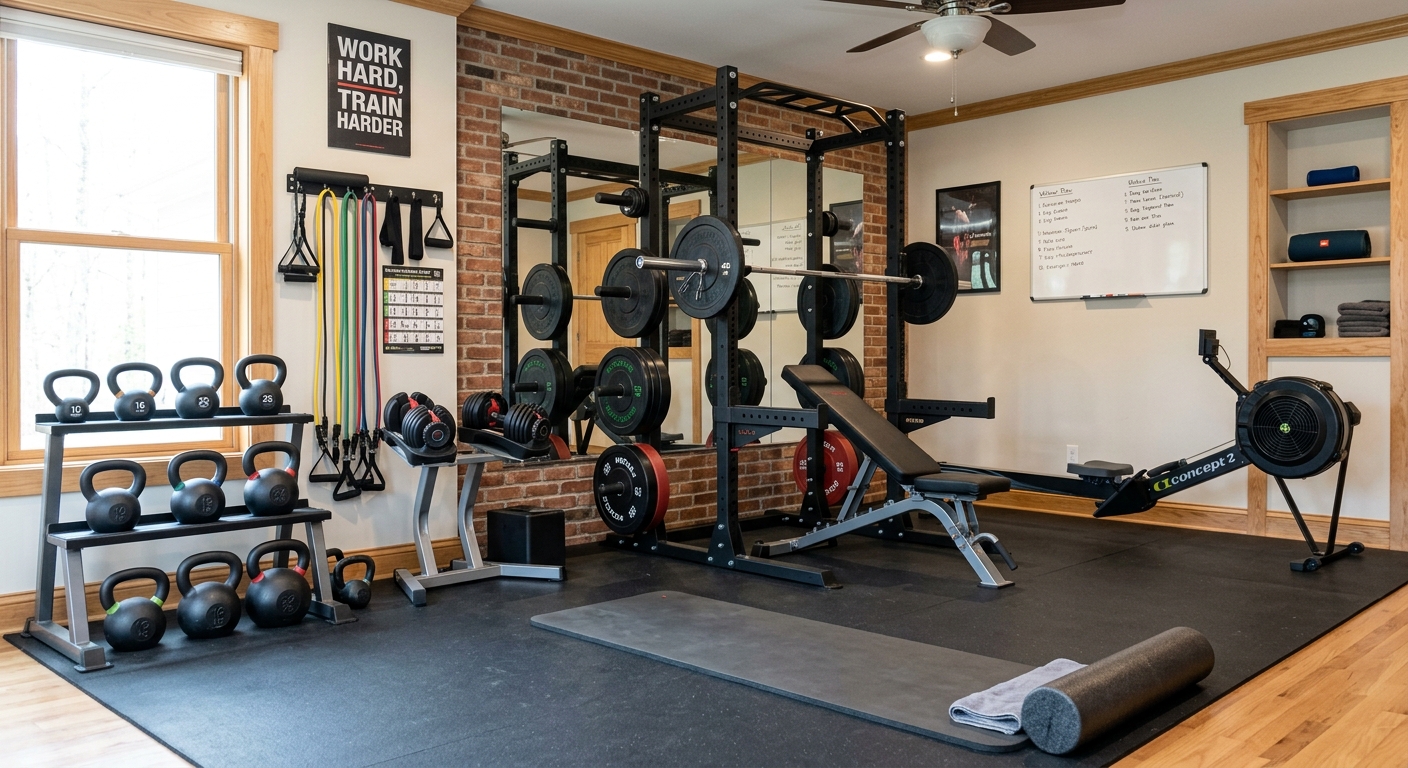
You don’t need a spare room and $3,000 to build a home gym that gets real results. Most
people overspend early on equipment they never use and underspend on the handful of
items that cover 90% of a good strength routine. Here’s how to build a setup that works, in
stages, without wasting money.
Start With the Essentials (Under $150)
If you’re just getting started, these few items will cover the vast majority of effective
strength training:
A set of adjustable dumbbells (or 2–3 fixed pairs covering a light, medium, and heavier
weight)
A resistance band set — cheap, versatile, great for warm-ups and travel
A yoga or exercise mat — for floor work, stretching, and joint comfort
With just these three items, you can train your entire body: squats, presses, rows, lunges,
core work — all of it. Don’t feel pressure to buy anything else until you’ve used these
consistently for a few weeks.
Stage Two: Build Out Your Range (Under $300 Total)
Once you know you’ll stick with home workouts, these additions expand what you can do
without needing a full rack of equipment:
A pull-up bar (doorframe-mounted bars are inexpensive and don’t require installation)
An adjustable weight bench — turns dumbbell exercises into a much wider variety of
movements
A kettlebell — great for full-body, functional movements like swings and carries
This stage is where a home gym starts to feel like a real, varied training space rather than
just “some dumbbells in the corner.”
Stage Three: For Serious Lifters (Investing Over Time)
If you’re committed long-term and want to keep progressing in strength, these are worth
saving for — but only once stages one and two are getting consistent use:
A barbell and weight plates — the most cost-effective way to keep adding resistance
over years of training
A squat rack or power cage — necessary once barbell weight gets heavy enough that
safety matters
A rowing machine or exercise bike — if cardio is a priority alongside strength
Buy these in stages, not all at once. Many people buy a full rack setup in month one and let
it collect dust — spreading purchases out based on actual use avoids that.
What You Can Skip (Save Your Money)
Fancy connected fitness machines — great if the price fits your budget, but not
necessary for effective training
A huge variety of dumbbells — a good adjustable set replaces 8–10 pairs of fixed
weights
Specialty accessory equipment — ab wheels, vibration platforms, etc. are nice-to-
haves,
The Real Value of a Budget Home Gym
The goal isn’t to replicate a commercial gym — it’s to remove every excuse that stops you
from training consistently. A simple setup you’ll actually use beats an expensive one that
intimidates you into skipping workouts. Start small, add equipment only when you’ve
outgrown what you have, and let your actual training habits — not marketing — guide what
you spend money on.
What’s currently in your home gym setup, or what’s holding you back from starting one? Let
me know in the comments.

