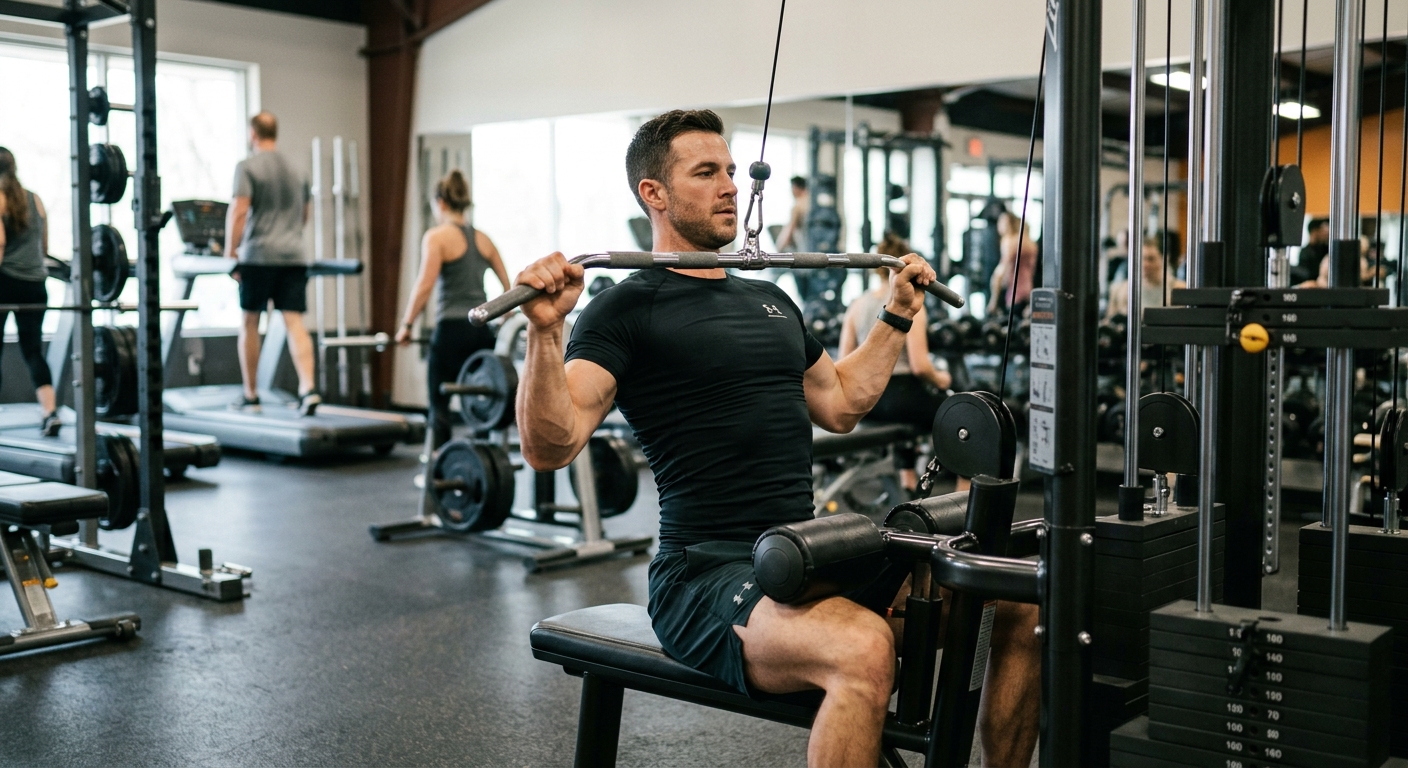
Walking into a gym for the first time is intimidating. Racks of unfamiliar equipment, people
who seem to know exactly what they’re doing, and a nagging fear that everyone’s watching
you (they’re not — everyone’s focused on their own workout). Here’s how to spend your first
three months building a real foundation, without wasting time or getting hurt.
Weeks 1–2: Learn the Movements, Not the Weight
Your only job right now is to learn proper form. Ego lifting — piling on weight before your
body knows how to move — is the #1 cause of early injuries and stalled progress.
Focus on five foundational movement patterns:
Squat (goblet squat or bodyweight squat to start)
Hinge (Romanian deadlift or kettlebell deadlift)
Push (push-ups or dumbbell bench press)
Pull (lat pulldown or assisted pull-up)
Carry/core (farmer’s carry, plank)
Use light weight. If you can’t do 10 clean reps with good form, it’s too heavy. Record
yourself or ask a trainer for a form check — most gyms offer a free intro session.
Weeks 3–6: Build a Consistent Routine
Once the movements feel natural, settle into a simple 3-day-a-week full-body program.
Full-body splits are ideal for beginners because you’re practicing each movement pattern
more often, which speeds up learning.
A sample week:
Day 1: Squat, bench press, row, plank
Day 2: Rest or light cardio
Day 3: Deadlift, overhead press, pull-down, carry
Day 4: Rest
Day 5: Repeat Day 1 with slightly more weight or reps
Weekend: Rest or active recovery
The goal here isn’t intensity — it’s showing up consistently and slowly getting stronger.
Weeks 7–12: Start Progressive Overload
By now your body has adapted to the basic movements, so it’s time to progress deliberately.
This is where actual strength and muscle gains start.
Simple rules:
Add small amounts of weight (2.5–5 lbs) once you can complete all sets and reps with
good form
Track your workouts — what you lifted last time is your target to beat this time
Don’t chase soreness; consistent, gradual increases beat all-out efforts every session
Common Pitfalls to Avoid
Skipping warm-ups. Five minutes of light cardio plus a few warm-up sets prevents
most injuries.
Program hopping. Pick one program and stick with it for at least 8–12 weeks before
judging results.
Ignoring recovery. Muscles grow during rest, not during the workout. Sleep and protein
intake matter as much as the lifting itself.
Comparing yourself to others. Everyone in that gym once looked like a beginner too.
What to Expect After 90 Days
Don’t expect dramatic physical transformation — that takes longer. What you will have after
90 days: solid form on the core lifts, a program you can stick to, and the confidence to walk
into any gym without feeling lost. That foundation is worth more than any short-term size or
strength gain, because it’s what makes the next year of progress possible.
Have questions about starting your own lifting journey? Drop them in the comments — I
read every one.

